Shut the system off and call a licensed electrician, or 911 if there's fire or smoke. Low production or an offline app matters, but it isn't an emergency.
Tell us what's happening
A person reads every request and connects you with a SunService Certified™ pro in your area. No spam, just help getting your solar working again.
You send the symptom and your ZIP
A screenshot from your monitoring app helps. Mention it in the notes.
A certified pro gets in touch
They work on any brand and price the job from the SunService Labor Guide™.
You approve before any repair
Nothing is repaired until you approve the price.
Your system, in one place
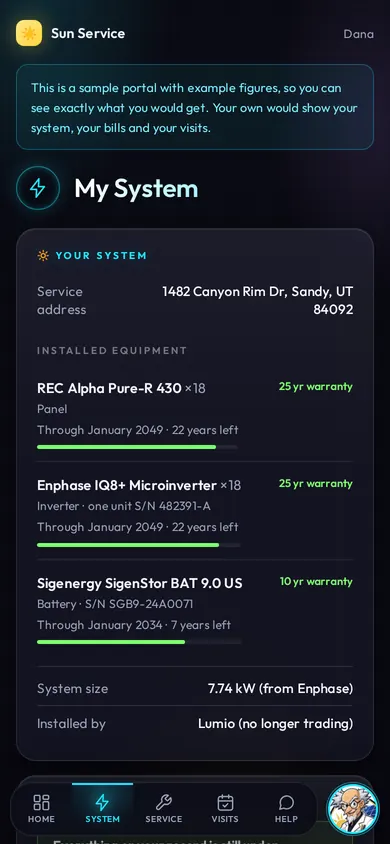
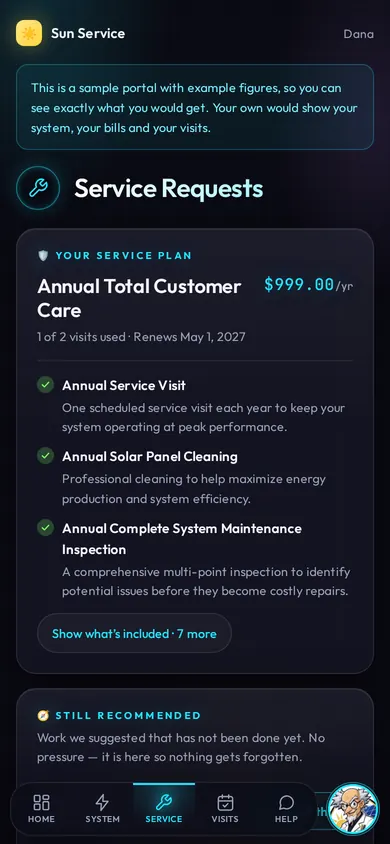
When your service company runs on Sun Service, it can give you a private portal link. You'll see what your system is making, what's been done to it, what it's cost, and how to reach your pro. There's no app to install.
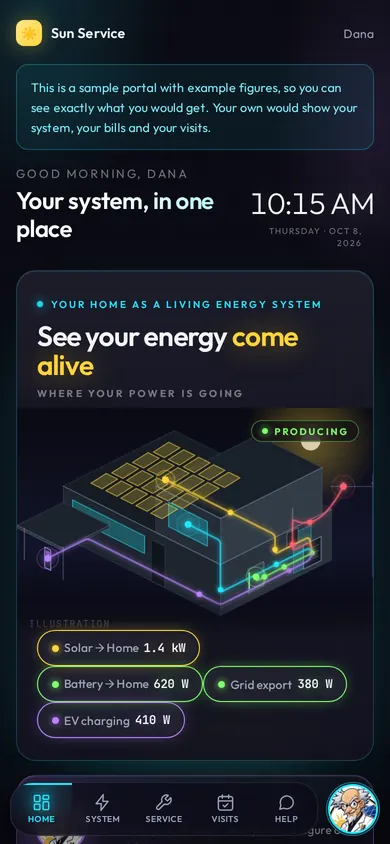
- See your energy come alive. Solar, battery, grid and EV flows drawn over your home, with the time of the last reading.
- Every panel, inverter and warranty. Know what's on your roof and how long it's covered.
- Visits, invoices and service requests. Ask for a call or a visit, and it lands with your pro.
- Send your power bill. Photograph a utility bill and the numbers reach your pro.
The sample portal uses example figures. Yours shows your own system.
Plain-English answers about your system, any time
Dr. Volt is the AI technician certified pros use, and it's in your portal too. Ask what a light means, why production dipped, or whether it can wait. When it can't, one tap requests a visit.
In the homeowner portal from a service company that uses Sun Service.
Keep it producing, not just working
Solar is low-maintenance, not no-maintenance. Certified companies offer yearly plans that catch faults before they cost you a season of production.
A yearly visit
A scheduled check of panels, wiring, inverter and battery, written up for your records.
Panel cleaning
Soiled panels quietly lose output. Plans can include a cleaning, booked for you.
Monitoring someone watches
Your pro can see when production drops or a device stops reporting.
Each certified company sets its own plans and prices. Ask your pro during your visit.
Understand your system
A little knowledge goes a long way. Here's what every solar homeowner should know, in plain English.
How your system actually works
Panels make DC power, an inverter (string or microinverters) converts it to the AC your home uses, and anything extra flows to the grid or your battery. Knowing which parts you have makes every service call faster.
Why production goes up and down
Output naturally falls in winter, on cloudy days, and as panels soil up. A sustained drop, though, usually means a tripped breaker, a comms fault, or a failed microinverter — worth checking, not ignoring.
Reading your monitoring app
Apps like Enphase, SolarEdge, Tesla, or FranklinWH show per-panel or system production. A flat line or "microinverters not reporting" is your early-warning light — screenshot it before you call.
Batteries & backup, explained
A battery stores solar for night use and can back up your home in an outage — but only the circuits it's wired to. If it won't island during an outage, that's a real fault worth a certified look.
Maintenance that actually matters
Solar is low-maintenance, not no-maintenance: keep panels reasonably clean, watch your monitoring monthly, and address comms or inverter faults early before they cost you a season of production.
Net metering & your savings
Most savings come from offsetting what you'd buy from the utility plus credits for what you export. If your bill jumped, lost production — not the rate plan — is often the real culprit.
If your installer closed
You're not stuck. Your warranty on the equipment often still stands with the manufacturer, and a SunService Certified™ pro can service any brand and handle the diagnosis and repair.
Why a SunService Certified™ company
With installers closing and orphaned systems everywhere, "certified" should mean something.
Verified, tested skills
Technicians pass role and tier exams, from Solar Intern to Master Technician, grounded in the SunService Repair Guide™.
Fair, flat-rate pricing
Jobs are priced from the SunService Labor Guide™: the same fair rate for the same work.
Any brand, any installer
Certified pros service systems from any manufacturer or installer, and credentials are recertified every two years.
Homeowner FAQ
Why is my solar producing less than it used to?
Production naturally rises and falls with the seasons and weather, but a sustained drop often points to a tripped breaker, a communications or monitoring fault, a failed microinverter or optimizer, soiling on the panels, or shading that has grown in over time. A certified pro can pull your monitoring data to pinpoint which it is.
My solar installer went out of business. Who fixes my system?
You do not need your original installer. A SunService Certified™ repair company can service systems from any brand or installer, diagnose the issue, and quote the repair with fair, flat-rate pricing from the SunService Labor Guide™.
What will a repair cost?
Your pro prices the work from the SunService Labor Guide™, a flat-rate standard written for solar, and shows you the price first. Nothing is repaired until you approve it.
Is low production an emergency?
Usually not, but it is worth checking soon. A burning smell, sparks, or a hot or scorched panel or disconnect is an emergency: shut the system off and call for help now.
How do I know a solar repair company is trustworthy?
Ask if they are SunService Certified™. Certified companies have technicians who pass role and tier exams, price jobs from the SunService Labor Guide™ so the same job costs the same fair rate, and carry verifiable credentials that are recertified every two years.
How do I get a homeowner portal?
If your service company runs on Sun Service, it can send you a private portal link. You can open the sample portal to see what it looks like.
Prefer to browse?
The SunService Certified™ directory of solar repair companies whose teams are trained, tested and accountable.